How to divide household chores fairly: a 6-step method
 Sérgio VidalCreator of Todonex
Published on 7 min read
In this article
To divide household chores fairly, list every chore your home needs (including the invisible ones, like planning meals and keeping track of bills), write down how often each one happens, then give each person whole chores to own, from noticing to finishing. Put everything on one shared list with repeating reminders and check in for ten minutes once a week. Below: why the usual split breaks down, a 6-step method and how to set it up in Todonex.
Why the usual split breaks down
Most homes don't decide who does what. It just happens. One person cooked a few times in the first month, so now they cook. The other person paid a bill once, so now they're “the one who handles the bills”. Years later, nobody remembers choosing, and one side of the house feels a lot heavier than the other.
The data says that feeling is common. A Pew Research Center analysis of U.S. marriages found that even when husbands and wives earn about the same, wives still spend more time on housework and caregiving (Pew Research Center, 2023). And it isn't only a question of hours. Research summarized by the British Psychological Society found that when wives believe they do an unfair share of the housework, it hurts the relationship for both partners, not only for the one doing more (BPS Research Digest).
There's also a hint about what helps. Research with same-sex couples finds that they tend to split chores more fairly (The Conversation, 2023). Without a “that's the woman's job” or “that's the man's job” to fall back on, the split has to be talked about and decided on purpose. That's the whole idea of this guide: replace the split that happened by accident with one you choose together.
Fair doesn't mean 50/50
A fair split is one everyone agrees to, knowing the full picture. It doesn't have to be identical. If one person works longer hours, the other may take more of the weekday chores and less on weekends. If someone hates cooking but doesn't mind laundry, trading makes everyone happier.
What makes a split unfair is usually not the numbers but what nobody sees: the person who always notices the dish soap is running out, who remembers the dentist appointments, who knows when the car inspection is due. That thinking work is real work. If it's not on the list, it doesn't get counted, and the person doing it ends up carrying more than anyone realizes. We wrote about this “mental load” in our guide to the shared to-do list.
How to divide chores: a 6-step method
- List every chore, including the invisible ones. Sit down together and write everything: cooking, dishes, laundry, cleaning, trash, groceries, bills, plants, pets, school forms, birthdays, booking repairs. Walk through the house room by room so nothing hides.
- Write how often each one happens. Daily, weekly, every two weeks, monthly, once a year. A daily chore is a much bigger commitment than a monthly one, and seeing the frequency next to each item makes that obvious.
- Give whole chores, not just the doing. “Sam: laundry” should mean noticing the basket is full, washing, drying and putting away, not waiting to be asked. Owning the whole chore is what actually takes it off someone else's mind.
- Split by preference first, then balance. Let each person pick what they mind least. Then look at what's left and at the frequencies, and trade until both of you think it's fair. Chores nobody wants can rotate every week or every month.
- Put it all on one shared list with reminders. Each chore with the owner's name at the start and a reminder that repeats at the right frequency. Now the list remembers, so nobody has to be the one who reminds everyone else.
- Check in for ten minutes a week. Pick a fixed moment, like Sunday evening. What worked, what got skipped, what needs to change. Adjust the list right there. Small tweaks every week beat a big argument every few months.
With kids, the same method works. Give each child a few chores that fit their age, with their name at the start, and keep the expectations clear and short. Teens can own a whole chore just like adults.
How to set it up in Todonex
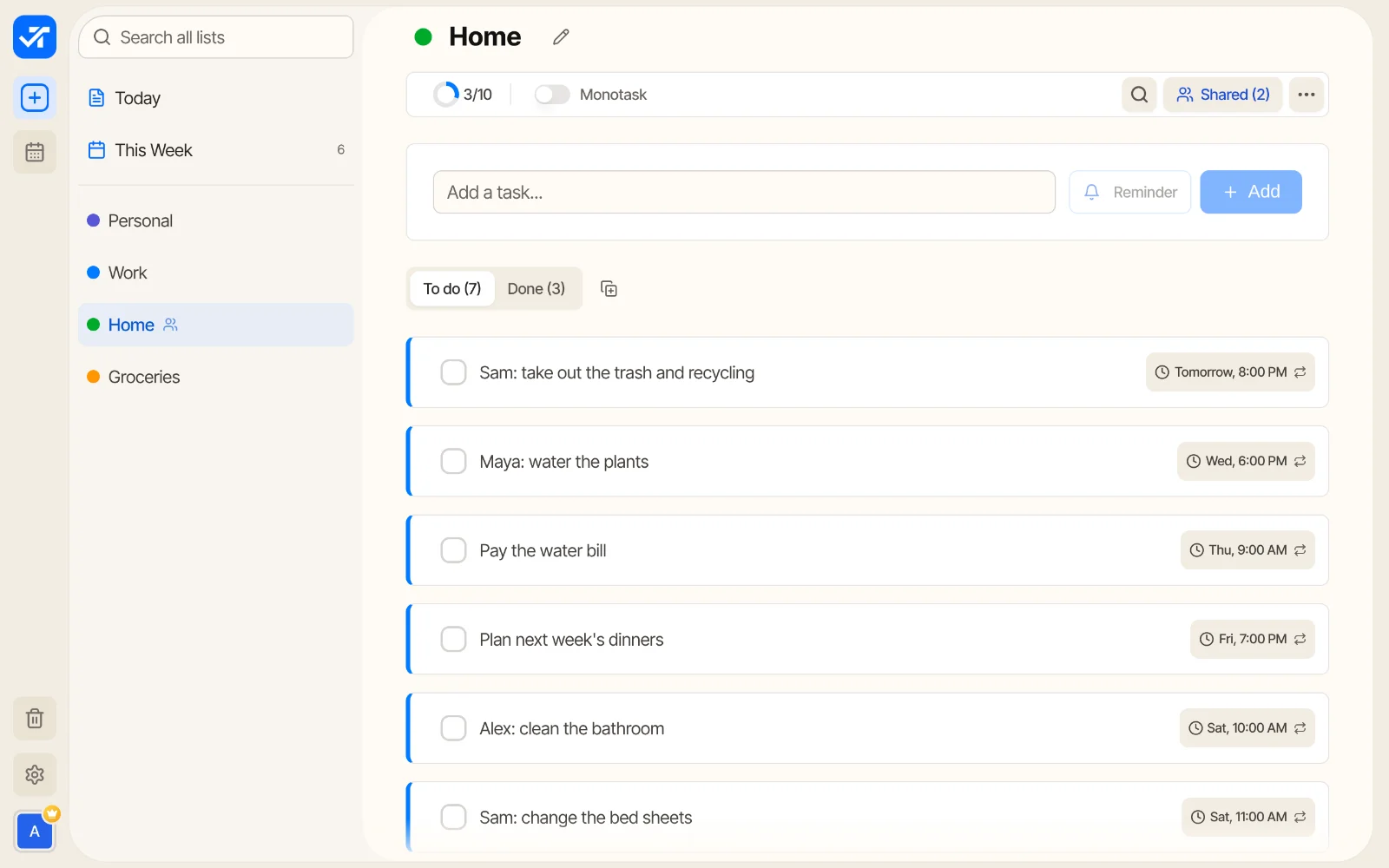
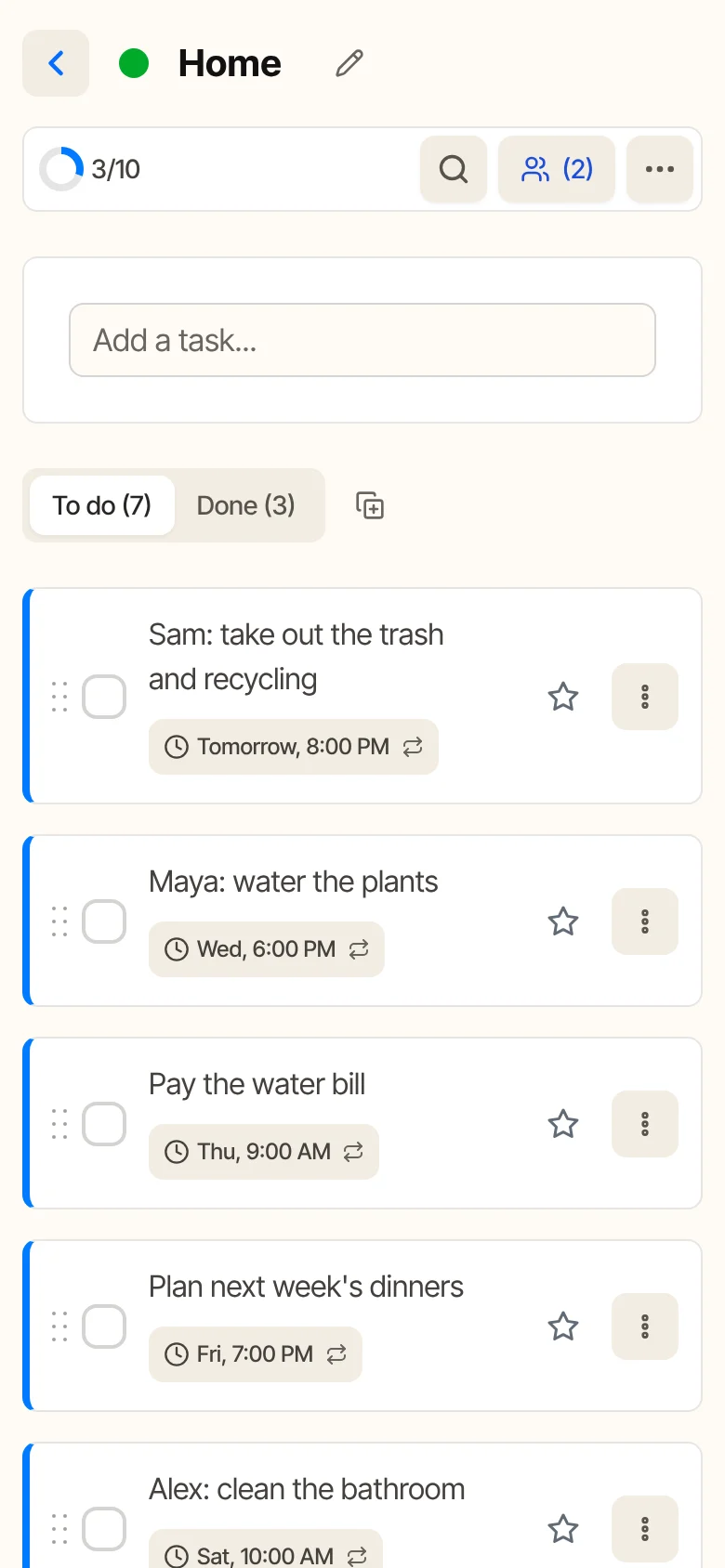
The idea is simple: one list for the home, shared with everyone who lives there, where each chore comes back on its own when it's due.
1. Create the list and share it
Create a list called “Home” and click Share at the top to invite the people who live with you. Sharing is a Premium feature for whoever shares the list. The people who receive it only need a free Todonex account, and each list can be shared with up to 10 people besides you. Our guide to the shared to-do list shows every step, with screenshots.
2. Add each chore with a repeating reminder
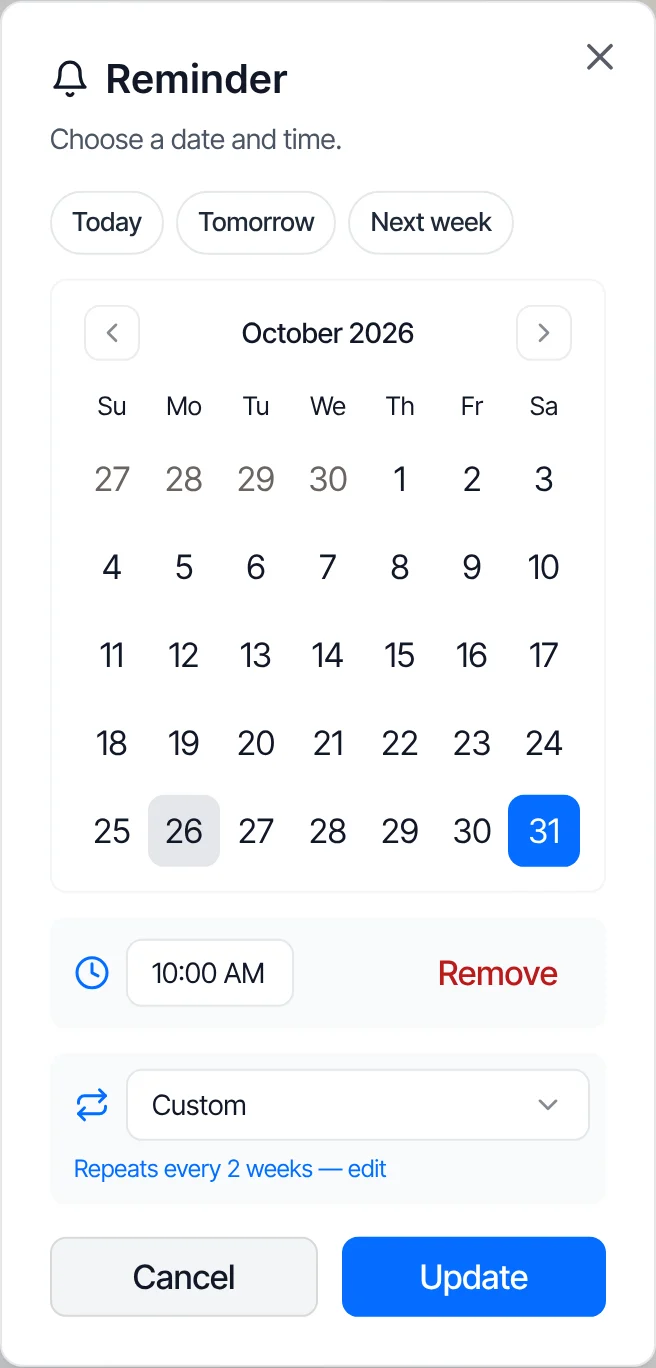
Write the chore with the owner's name at the start (“Maya: water the plants”) and add a reminder. Reminders that repeat are on the free plan. Pick Daily, Weekly, Monthly or Yearly, or choose Custom for things like “every 2 weeks” or “every 3 days”. You can also make a series stop after a number of times or on a specific date.
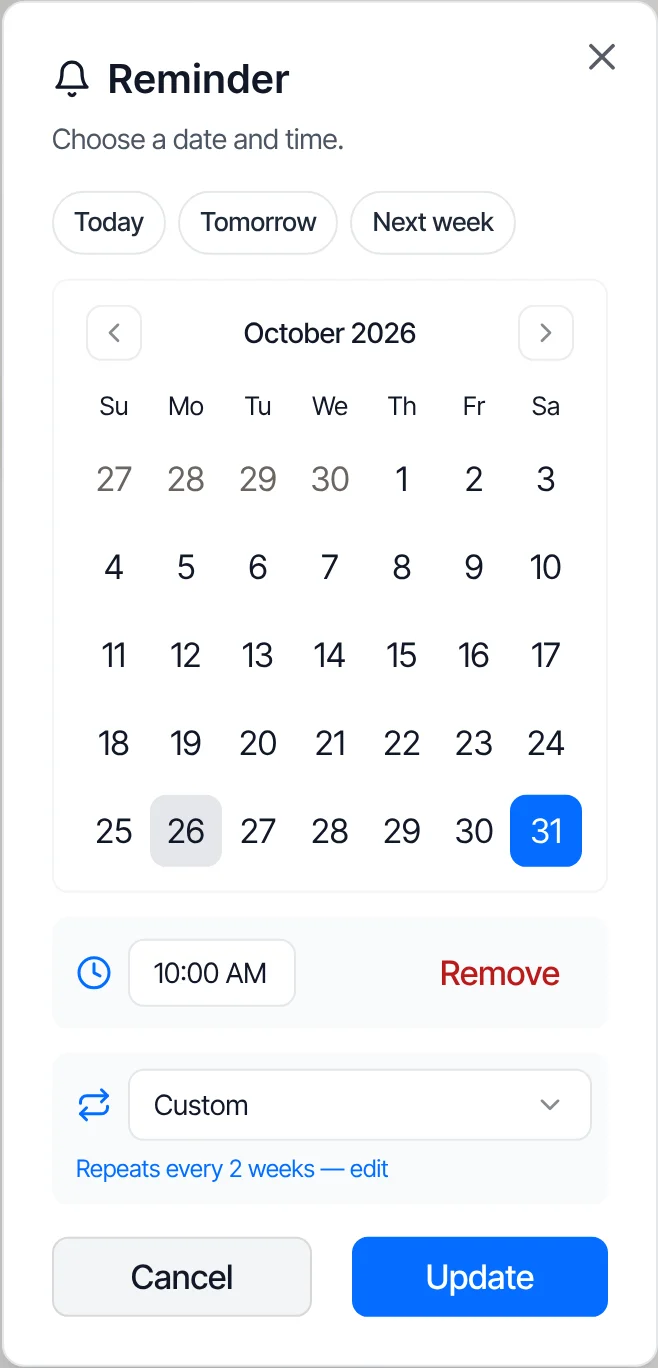
When you check off a chore that repeats, it doesn't disappear: it moves to the next date and stays on the list. The trash goes out on Tuesday, and on Wednesday the chore is already waiting for next Tuesday.
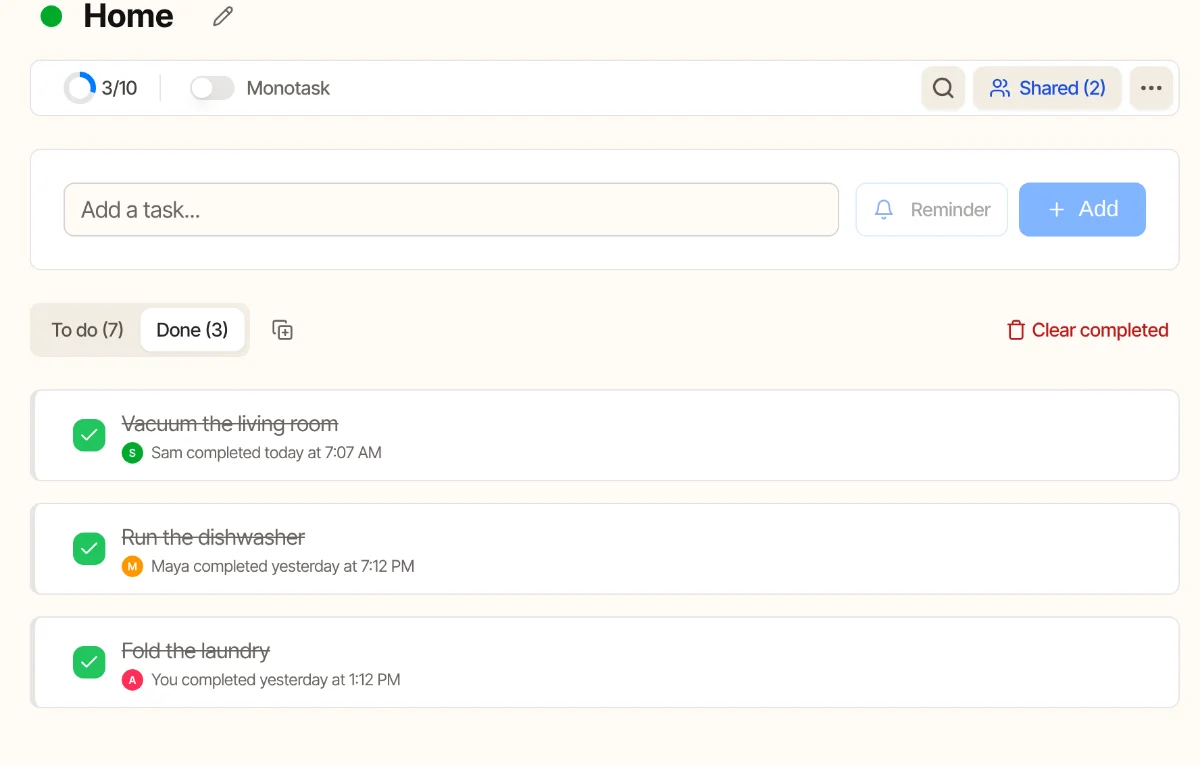
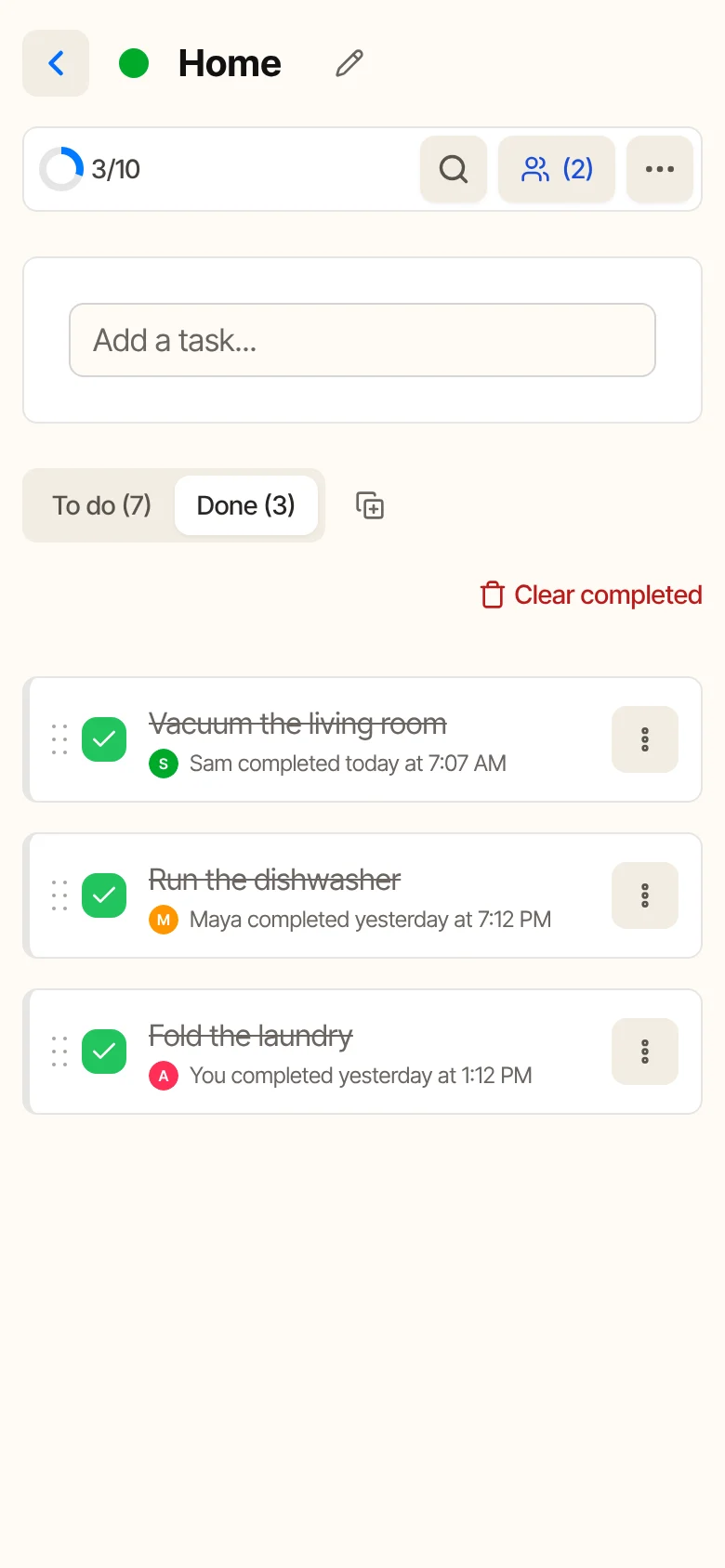
3. See who did what
For one-off chores, like vacuuming before guests arrive or fixing the faucet, the Done tab of a shared list shows who completed each one and when. It's there to avoid doing things twice, not to keep score.
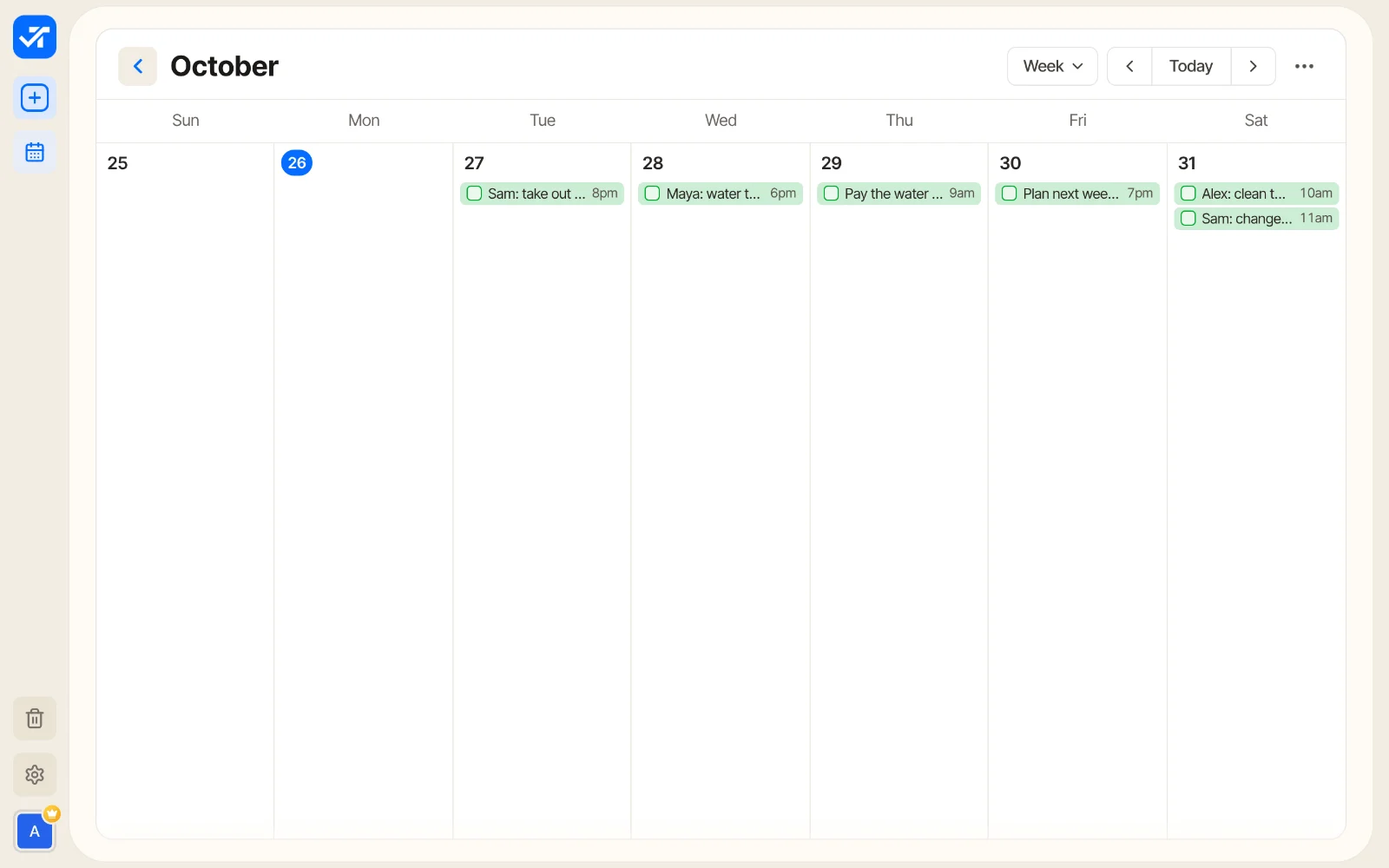
4. Look at the week on the calendar
With Premium, every task with a reminder shows up on the Calendar, on its day and time and in the list's color. The week view is a good way to spot a heavy day, like two chores stacked on Saturday morning, and spread them out.
On the phone
Everything works the same way on the phone, where most chores actually happen. Install Todonex on your home screen and check off the chore right after you finish it.
Tips to make it last
- Agree on what “done” means. “Clean the kitchen” can mean wiping the counters or scrubbing the stove. Five seconds of clarity saves a lot of frustration.
- Don't redo someone else's chore. If it's done a bit differently from how you'd do it, let it go. Redoing it quietly tells the other person it was never really theirs.
- Rotate the chores nobody likes. A custom reminder every 2 or 4 weeks with the next person's name makes the rotation automatic.
- Leave room for real life. Someone gets sick, someone has a hard week at work. A quick swap on the list is better than a skipped chore nobody mentions.
- Do one chore at a time. A long list of chores can feel endless. Pick the next one and finish it, like in our guide to monotasking.
Frequently asked questions
What's a fair way to split chores when one partner works more hours?
Count paid work and housework together. The person with more free time usually takes more of the daily chores, and the split should be reviewed when schedules change. What matters is that both of you agree it's fair.
Should chores be split exactly 50/50?
Not necessarily. A fair split is one you both agree to after seeing the full list, including the planning and remembering. For some couples that's close to half each. For others, it's a different balance that fits their lives.
Can I use Todonex for chores without paying?
Yes. Lists, reminders that repeat and Monotask Mode are all on the free plan. Sharing a list and the Calendar are Premium. Whoever receives a shared list doesn't need Premium.
What happens when I check off a chore that repeats?
It moves to its next date and stays on the list. It only leaves the list when the series ends, if you set it to stop after a number of times or on a date.
Sources
- Pew Research Center (2023). In a growing share of U.S. marriages, husbands and wives earn about the same.
- British Psychological Society, Research Digest. When wives believe they do an unfair share of housework, everyone loses.
- The Conversation (2023). Same-sex couples divide household chores more fairly. Here's what they told us works best.
Your next task is waiting.
Create your free Todonex account, write down what's on your mind and get it done, one task at a time. No credit card.
Start free